Why Évora Quietly Stole My Heart – A Slow Travel Love Story
You know that feeling when a place just gets you? Évora, Portugal, wasn’t on my radar, but slowing down here changed everything. No rush, no crowds—just sunlit stones, whispered history, and markets alive with local rhythm. This isn’t about ticking landmarks off a list. It’s about lingering in plazas, tasting time in every bite, and feeling a city breathe. If you crave travel that connects, not drains, Évora might just surprise you too.
The Rhythm of Arrival: Stepping Into Slow Motion
Arriving in Évora feels less like entering a tourist destination and more like stepping into a different tempo of life. Whether you reach the city by regional train from Lisbon or by car along the sun-drenched roads of the Alentejo, the transition is unmistakable. As the modern world recedes, a quiet settles in. The first sight of Évora’s ancient walls, rising like sentinels from the rolling plains, signals that something older and more deliberate awaits within.
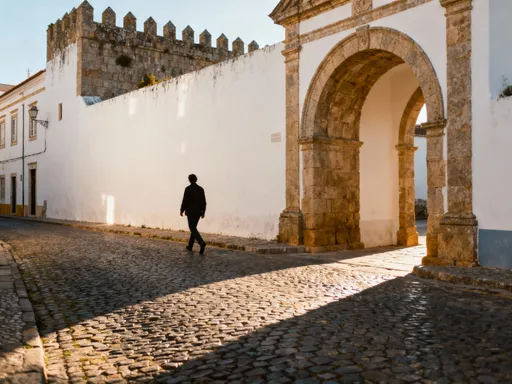
Passing through the medieval gates—Porta de Moura or Porta da Alegria—you leave behind not just traffic but the urgency that so often defines urban travel. The cobbled streets, worn smooth by centuries of footsteps, invite a slower gait. There’s no honking, no jostling crowds, and rarely a tour bus in sight. Instead, the morning light glows on whitewashed houses with iron balconies, and the scent of freshly baked bread drifts from a corner bakery. It’s in these early moments that Évora begins to work its quiet magic.
This city doesn’t demand your attention; it earns it through stillness. Unlike destinations built for spectacle and speed, Évora unfolds gradually. The rhythm here is set by the sun, by the opening of shop shutters, by the bells of the cathedral marking the hours. Visitors who expect constant stimulation may feel adrift at first. But those willing to decelerate discover a rare gift: the ability to truly notice. A pattern in the tilework, the shadow of a wrought-iron cross, the laughter from a hidden courtyard—these are the details that accumulate into a deeper kind of memory.
Slowing down isn’t just a choice in Évora; it’s the only way to experience the city fully. The absence of digital noise and sensory overload allows space for reflection. You begin to walk not from point A to point B, but with curiosity, letting the city guide you. A stray cat leads you down an alley. A patch of sunlight draws you to a stone bench. This is travel as presence, not performance—a reminder that some of the most meaningful journeys are the ones where nothing dramatic happens, yet everything changes.
Historical Layers: Where Time Stands Still (But Speaks Loudly)
Évora’s designation as a UNESCO World Heritage site is not merely ceremonial—it reflects the city’s extraordinary preservation and layered history. Walking through its streets is like turning the pages of a living history book, where Roman foundations support Renaissance chapels and Moorish influences linger in the layout of narrow alleys. Each stone tells a story, not of conquest alone, but of coexistence, adaptation, and endurance across centuries.
At the heart of this historical tapestry stands the Temple of Diana, a misnomer that has stuck through time. Though never actually dedicated to the Roman goddess, this remarkably preserved Corinthian temple dates back to the 1st century AD and once formed part of a larger forum. Standing before its towering granite columns, especially in the golden light of late afternoon, one feels the weight of antiquity. What makes the experience profound is not just seeing the structure, but returning to it at different times of day—watching how the shadows shift, how the light catches the weathered carvings, how locals pass by with quiet familiarity. This kind of repeated, unhurried observation reveals more than any audio guide ever could.
Equally compelling is the Sé de Évora, the city’s imposing Gothic cathedral. Completed in the 13th century, it rises with solemn grandeur over the skyline. Inside, the cool silence invites reverence. The nave soars overhead, supported by massive pillars, while side chapels glow with gilded woodwork and delicate azulejos—traditional Portuguese tiles depicting biblical scenes. But the true depth of the experience comes not from rushing through, camera in hand, but from sitting quietly in a pew, absorbing the atmosphere, and noticing how sunlight filters through stained glass onto ancient stone floors.
What sets Évora apart is not just the survival of these monuments, but the way they are woven into daily life. Children play near the temple ruins. Shopkeepers sweep steps carved from Roman masonry. University students study beneath cathedral arches. This integration of past and present fosters a sense of continuity rarely found in more commercialized historic cities. Preservation here isn’t about freezing time, but allowing it to flow naturally, with respect. For the mindful traveler, this offers a powerful lesson: history is not something to be consumed quickly, but lived alongside, absorbed slowly, and honored with attention.
Sacred & Soulful: The Chapel of Bones and Its Quiet Power
Few places in the world evoke contemplation as profoundly as the Capela dos Ossos, or Chapel of Bones. Housed within the 15th-century Church of St. Francis, this small, dimly lit chapel is lined with the remains of thousands of monks and local residents—skulls and femurs arranged in intricate patterns across walls and pillars. At first glance, the sight may seem unsettling, even macabre. But Évora’s chapel does not seek to shock; it invites reflection, offering a space where mortality is not hidden but honored.
The origins of the chapel lie in a practical necessity—the overcrowding of cemeteries in the 16th century—but it was transformed into a spiritual statement by the Franciscan friars. Inscribed above the entrance is a haunting phrase: 'We bones that are here, await yours.' This is not a threat, but a memento mori—a reminder of life’s impermanence. In a world that often glorifies youth, speed, and endless productivity, the chapel presents a counterpoint: a call to mindfulness, humility, and presence.
Visiting the Capela dos Ossos at pace would miss its essence. The power lies not in the visual spectacle, but in the silence that follows it. Standing among the bones, listening to the hush, one begins to feel a shift—not fear, but a softening. The air is cool, the light subdued. A single candle flickers. Time slows. This is where slow travel meets inner stillness. The chapel does not demand belief, only awareness. It asks the visitor to pause, to consider what truly matters, and to recognize that every life, no matter how ordinary, ends in dust and memory.
For families traveling with older children, the chapel can serve as a gentle introduction to complex themes of life and death, presented not with fear but with dignity. Guides on-site provide historical context, emphasizing the ethical treatment of the remains and the cultural significance of the site. Photography is permitted but discouraged out of respect, reinforcing the idea that some experiences are meant to be internalized, not captured. In this way, the Capela dos Ossos becomes more than a tourist stop—it becomes a moment of connection, not just with history, but with oneself.
Taste of the Alentejo: Markets, Flavors, and Local Tables
To understand Évora is to taste it. The cuisine of the Alentejo region is hearty, generous, and deeply rooted in tradition—food born of a land where olive groves stretch endlessly and cork oaks dot the hills. Here, meals are not fuel, but rituals of connection, best experienced slowly, with good company and even better wine. The Mercado Municipal, housed in a striking 19th-century iron structure reminiscent of Parisian halls, is the perfect place to begin.
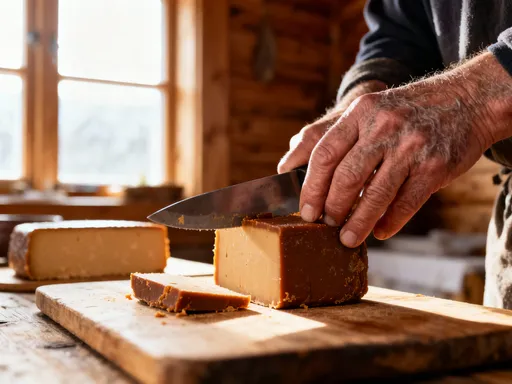
Inside, the market hums with life. Stalls overflow with sun-ripened tomatoes, plump figs, and baskets of golden saffron—once called 'red gold' for its value. Local cheeses, especially the firm, tangy queijo de ovelha made from sheep’s milk, are displayed with pride. Nearby, cured hams hang like works of art, their deep red hues promising rich, savory flavors. Butchers offer samples of presunto, and bakers warm up pastéis de massa tenra—flaky pastries filled with spiced meat. The air is a tapestry of scents: garlic, rosemary, wood smoke, and the faint tang of vinegar from pickled vegetables.
For the slow traveler, the market is not just a place to shop, but to observe, engage, and learn. A simple smile and a tentative 'bom dia' can lead to a conversation with a vendor, who might explain how to prepare migas—a humble dish of bread crumbs sautéed with garlic and pork—or recommend the best olive oil from a nearby quinta. These small exchanges, unscripted and genuine, are the soul of authentic travel.
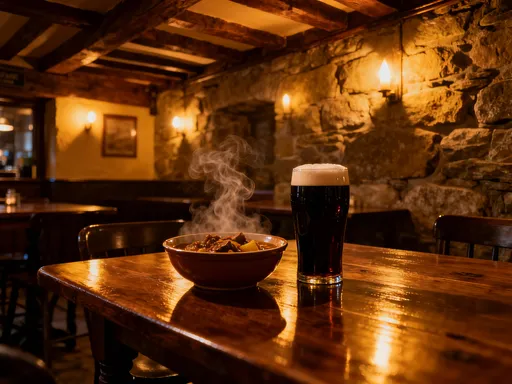
From the market, the next step is a tasca—a family-run eatery tucked into a narrow alley. Here, lunch unfolds over two hours: a carafe of local red wine, a plate of açorda (a garlicky bread soup enriched with egg and coriander), and perhaps a grilled sardine or a slice of açorda com ovo. There’s no rush. Servers check in with a nod, not a timer. This is food as hospitality, not service. And beyond the city, vineyard visits offer another layer of immersion. Small-scale quintas welcome guests for tastings not as transactions, but as shared moments—pouring wines aged in oak, explaining the terroir, and pointing to the hills where the grapes grow. In Évora, every meal is an invitation to slow down, savor, and belong, even if only for an afternoon.
Walled City Wander: Neighborhoods That Unfold With Time
Évora’s historic center, encircled by 14th-century walls, is compact enough to explore on foot yet rich enough to reward days of wandering. To experience it fully, one must resist the urge to map every landmark and instead allow for aimless discovery. The city reveals itself in fragments—a splash of bougainvillea over a doorway, the echo of footsteps in a deserted alley, the sudden glimpse of a courtyard blooming with jasmine.
The Jewish Quarter, once home to a thriving community before the 15th-century expulsions, offers a poignant glimpse into a layered past. Its narrow lanes, some barely wide enough for two people, follow the original Moorish street plan. Today, these alleys house artisan shops, small galleries, and quiet residences. A stone marker embedded in one wall bears a Star of David—a subtle tribute to those who once lived here. Walking through this neighborhood, one feels the weight of history not in grand monuments, but in the silence between buildings, in the way sunlight falls on ancient doorways.
Not far away, the University of Évora—founded in 1559 and one of the oldest in Portugal—adds another dimension to the city’s intellectual and cultural fabric. Its baroque cloisters now house lecture halls, but students still gather in the shaded courtyards, books in hand. A visit to the university museum offers insight into its Jesuit origins, but even more rewarding is simply sitting on a bench nearby, watching the rhythm of academic life unfold.
Hidden gardens, too, are among Évora’s quietest treasures. The Jardim Público, though modest, offers shaded paths, fountains, and benches perfect for reading or journaling. Further off the beaten path, private patios open unexpectedly, revealing citrus trees and tiled fountains. These spaces are not designed for tourism, but for living. They remind the visitor that beauty often resides in the overlooked, the unadvertised, the places that reveal themselves only to those who wander without agenda. In Évora, getting lost is not a mistake—it’s a method.
Beyond the Walls: Countryside Rhythms and Olive Groves
While Évora’s walled city captivates, the surrounding Alentejo landscape deepens the experience of slow travel. Just beyond the gates, the terrain opens into a serene expanse of olive groves, cork oak forests, and golden fields that ripple in the wind. This is a region shaped by seasons, by the slow work of farming, and by a deep connection to the land. To explore it is to step further into stillness.
Cork harvesting, a centuries-old tradition, takes place each summer when skilled workers carefully strip bark from cork oaks without harming the trees. These forests—known as montados—are not only economically vital but ecologically unique, supporting diverse wildlife and sustainable agriculture. Driving or biking through them, one sees the white-painted markings on trunks indicating the year of last harvest, a quiet testament to long-term stewardship.
Another profound experience lies at the Cromeleque dos Almendres, one of the largest megalithic complexes in the Iberian Peninsula. Scattered across a gentle hillside, over ninety granite stones stand in rough alignment, some engraved with cup marks and spirals. Dating back as far as 6000 BC, they predate Stonehenge and remain shrouded in mystery. Unlike more famous sites, Almendres sees few visitors. There are no ticket booths, no guided tours—just a dirt path and a sense of awe. Standing among the stones at sunrise, with mist rising from the fields, one feels a deep connection to the ancient rhythms of the earth.
Day trips to nearby villages like Monsaraz or Estremoz offer further immersion. These hilltop towns, with their whitewashed houses and panoramic views, move at a pace dictated by sunlight and seasons. A coffee in a village square, a visit to a local craft shop selling hand-thrown pottery or woven linen, a walk along ancient ramparts—these moments accumulate into a richer understanding of place. In the Alentejo, distance is not measured in kilometers, but in stillness, in the time it takes for a shadow to cross a wall, or for a farmer to wave from his field.
Living Like a Local: Temples of Coffee, Craft, and Calm
In Évora, the sacred is not confined to churches. It can be found in the corner café where an elderly man sips his bica—a small, strong espresso—while reading the newspaper, or in the pottery studio where a woman shapes clay with hands that have known decades of practice. Slow travel, at its best, is about adopting the rhythms of daily life, even if temporarily. It’s about becoming a familiar face, not just a passing shadow.
One of the simplest pleasures is the morning ritual of café culture. A pastel de nata (custard tart) warmed slightly, paired with a bica served in a tiny cup—this is breakfast as ceremony. The best cafés are unassuming: tiled floors, wooden counters, the hiss of the espresso machine. There’s no pressure to order food or vacate the table. You can sit for an hour, watching the world wake up, listening to snippets of conversation, sketching in a notebook. Repeating visits to the same café fosters a quiet connection—a nod from the barista, a shared smile with a regular.
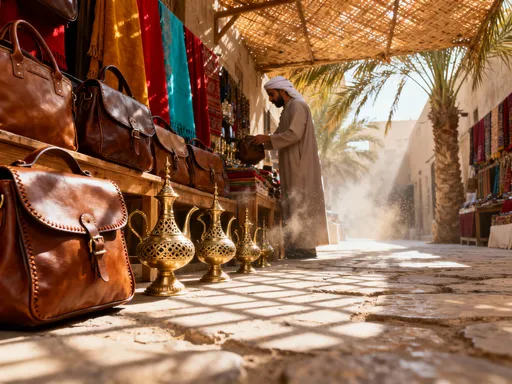
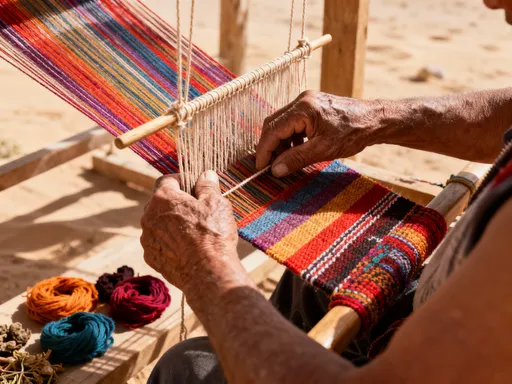
Artisanship thrives in Évora, particularly in the form of cork products, ceramics, and woven goods. Unlike mass-produced souvenirs, these items carry the imprint of time and care. A cork handbag, dyed in earthy tones, represents both sustainability and tradition. A hand-painted tile, glazed with cobalt and white, echoes centuries of design. Shopping here is not transactional; it’s relational. Artisans often work in small studios attached to their shops, happy to explain their process. Buying a piece isn’t just about ownership—it’s about carrying a fragment of Évora’s spirit home.
Finally, the most profound slow travel practice is doing nothing at all. Reading in a sunlit courtyard. Journaling as dusk paints the sky in rose and gold. Sitting by a fountain, listening to water trickle. These moments, unremarkable on the surface, are where transformation occurs. They allow space for reflection, for gratitude, for the quiet joy of being present. In a world that glorifies busyness, Évora whispers a different truth: that the deepest experiences are often the quietest, and that the most meaningful journeys end not with souvenirs, but with a changed heart.
Évora does not dazzle with fireworks or thrill with adrenaline. It wins you over with stillness, with authenticity, with the gentle persistence of a place that has learned to live at its own pace. It reminds us that travel need not be about accumulation—of photos, stamps, or checked-off attractions—but about depth, connection, and presence. In a single week here, one might walk the same streets several times, return to the same café, sit in the same plaza as the light shifts. And in that repetition, there is revelation.
Slow travel, as embodied by Évora, is not a trend. It is a return—to mindfulness, to community, to the simple act of noticing. It asks us to put down our phones, to breathe, to allow a place to speak to us in its own time. For the woman in her thirties, juggling family and responsibilities, or the woman in her fifties seeking renewal, Évora offers a rare gift: permission to slow down, to listen, and to remember that life, at its best, unfolds gently. If you seek a destination that nourishes rather than exhausts, that speaks to the soul rather than the schedule, let Évora be your next chapter. You may find, as so many have, that it quietly steals your heart—and gives you stillness in return.